

The Los Gallardos (Almería) fire: who might be responsible for the tragedy?
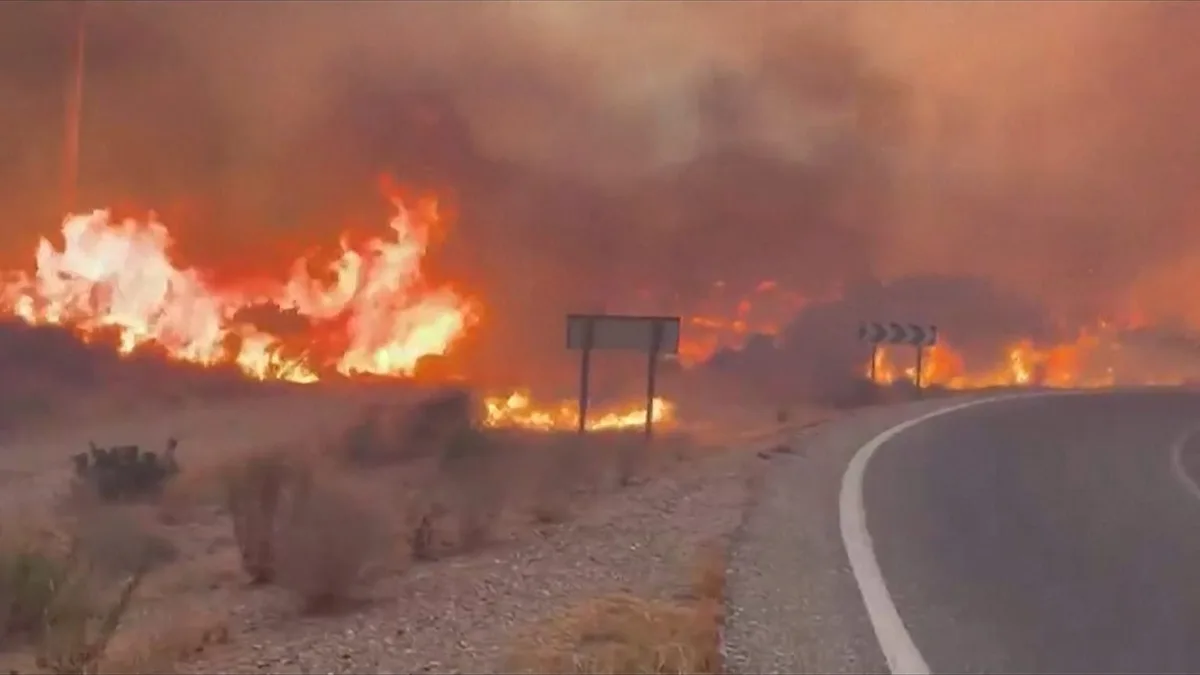
The devastating fire that broke out in Los Gallardos (Almería) has once again brought to the fore a question that goes beyond the emergency itself and the enormous human and environmental impact caused by the blaze: could it have been prevented? And, if so, who should be held accountable for the damage caused?
Whilst investigations by the Civil Guard, the judicial authorities and specialist technicians are ongoing, there are as yet no definitive conclusions regarding the cause of the fire or the handling of the emergency. However, experience shows that in this type of disaster, the investigation must not be limited to identifying the initial source of the fire. It is also essential to analyse whether there were failings in prevention, in the maintenance of infrastructure, in the coordination of emergency services or in the protection of the population.
In Spain, a major forest fire can give rise to criminal, civil and even financial liability on the part of the public authorities, depending on the circumstances that are ultimately established.
The investigation must determine the actual cause of the fire
Initial reports suggest that one of the working hypotheses is a possible fault in the electrical infrastructure. However, this possibility must be confirmed or ruled out by the relevant expert reports and the investigative proceedings currently underway.
If it were ultimately established that the fire originated from a power line, a transformer, a pole or any other faulty installation, the investigation would have to determine whether the infrastructure had been properly maintained and whether the risk was known or could have been detected through the inspections required by regulations.
It would not be the first time that a wildfire has ultimately been linked in court to the poor maintenance of electrical installations. Spanish case law has already seen proceedings in which electricity companies have been found liable for fires caused by inadequately maintained distribution lines.
Could an electricity company be held liable?
If the investigation were to conclude that the cause of the fire was linked to an electrical installation, various forms of liability could be examined.
Companies that own power lines are obliged to maintain their installations in a safe condition, carry out regular inspections and take all necessary measures to minimise risks, particularly in high-risk forest areas during the summer months.
The presence of a damaged cable, a pole in poor condition or a failure to maintain vegetation near the lines could, if a causal link with the fire were proven, give rise to significant civil claims for personal injury and property damage caused.
In the most serious cases, where the failure to implement safety measures is particularly significant, the possibility of criminal liability cannot be ruled out either.
International experience shows that electricity companies can be held liable for major forest fires when investigations reveal failures in infrastructure maintenance, inadequate risk management or a breach of safety obligations. There are particularly significant precedents in the United States.
Cases such as the California wildfires or the Maui tragedy have led to thousands of civil lawsuits, criminal investigations and multi-million compensation settlements against electricity suppliers. Although each legal system has significant differences, these proceedings highlight that the investigation into a major fire should not be limited to determining where the fire started, but should also examine whether it could have been prevented through proper management of infrastructure and foreseeable risks.
The actions of public authorities may also be subject to investigation
The investigation should not focus exclusively on the origin of the fire.
In an emergency of this nature, it is also legitimate to analyse how the crisis was managed once the fire had started.
Among other issues, the speed of the operational response, the adequacy of the resources deployed, coordination between authorities, the effectiveness of emergency plans and the information provided to the public could be examined.
Particular attention should be paid to analysing the forest fire prevention plans and the existing evacuation protocols for the affected areas.
If it were established that certain mandatory plans did not exist, were inadequate or were not correctly implemented, administrative or financial liability could arise, provided that a direct link to the damage suffered could be demonstrated.
Could the use – or non-use – of the ES-Alert system give rise to liability?
Following the fire, an intense debate has arisen regarding the use of the ES-Alert system, designed to send emergency alerts directly to the public’s mobile phones.
It is advisable to proceed with caution. The mere absence of an alert does not automatically imply negligence.
However, the investigation may assess whether, given the specific course of the fire, activating the system would have been advisable or even necessary to enhance the protection of the public.
If it is established that there was an obligation to issue certain alerts and that their absence had a significant influence on the harmful outcome, this circumstance could be taken into account in the analysis of potential liability.
What happens if some victims did not follow the evacuation instructions?
Another issue that often arises in this type of tragedy is the behaviour of the victims themselves.
On occasion, some people decide to remain in their homes, attempt to protect their possessions or leave the area via routes other than those recommended by the emergency services.
From a legal perspective, this does not automatically rule out the potential liability of third parties.
The courts will have to assess, where appropriate, whether there was contributory negligence and what the actual impact of each party’s behaviour was on the final outcome.
Each situation must be analysed individually, and general conclusions can never be drawn before the investigation is complete.
Can the absence of, or failure to comply with, forest fire prevention plans give rise to liability?
Another issue that is likely to be examined during the investigation is compliance with legal obligations regarding forest fire prevention. National and regional regulations impose on public authorities, certain landowners, as well as the owners of infrastructure and operations located in high-risk areas, a series of preventive measures designed to reduce the likelihood of a fire starting or, should one occur, to limit its spread.
These measures include, depending on the circumstances, clearing vegetation, maintaining safety buffer zones, removing accumulated forest fuel, maintaining firebreaks, clearing roadside verges, maintaining protective ditches, and the proper management of vegetation beneath power lines or in the vicinity of other infrastructure deemed sensitive.
If, during the investigation, it were established that mandatory prevention plans had not been drawn up, implemented or updated, or that the clearance and maintenance work required by the regulations had not been carried out properly, various forms of liability could arise. Depending on who was responsible for taking action, the investigation could extend to private individuals, concessionaires, utility companies or the relevant public authorities.
In proceedings of this kind, it is not sufficient merely to establish the existence of uncleared vegetation or poorly maintained infrastructure. It will be necessary to determine whether such non-compliance had a real impact on the cause of the fire or its rapid spread, and whether, had the required preventive measures been correctly implemented, the scale of the tragedy could have been reduced or even prevented.
Could there be criminal liability?
If the investigation concludes that the fire was the result of grossly negligent conduct or a breach of statutory safety obligations, potential criminal liability may be investigated.
Depending on the facts ultimately established, the proceedings could extend to both natural and legal persons, always within the framework provided for by the Criminal Code and in full respect of the principle of the presumption of innocence.
The fact that there were fatalities necessitates a particularly thorough investigation to determine whether the outcome could have been prevented through compliance with legally enforceable obligations.
The families have the right to know the whole truth
Beyond any potential compensation, the victims’ families have the right to have the circumstances of the fire fully clarified.
They may join the legal proceedings, request investigative measures, participate in expert assessments where appropriate, and have access to independent legal assistance to defend their interests.
The search for the truth is the first step towards establishing liability and preventing similar tragedies from happening again.
The criminal investigation is being conducted under the direction of the Civil and Preliminary Investigation Section (Bench No. 3) of the Court of First Instance in Vera (Almería), whilst the Civil Guard, through its specialist units and the Forensic Science Service, is carrying out investigations aimed at determining the cause of the fire, reconstructing its progression and clarifying whether any acts or omissions took place that could give rise to criminal, civil or financial liability.
Frequently Asked Questions
Has the cause of the fire been officially established?
No. The investigations are still ongoing and there is as yet no definitive conclusion regarding the origin of the fire.
Can a claim be made against an electricity company?
Yes, provided it can be proven that a facility owned by the company caused the fire or contributed decisively to its spread.
Can the public authorities be held liable?
Yes. If the investigation were to demonstrate abnormal operation of public services or significant breaches regarding prevention or emergency management, potential financial liability could be considered.
Can families be involved in the investigation?
Yes. Victims and their relatives may exercise the rights granted to them under procedural law to participate in the criminal investigation proceedings and defend their interests.
BCVLEX can help victims and their families
Major forest fires give rise to particularly complex investigations involving experts, engineers, police forces, insurers and various public authorities.
At BCVLEX, we analyse each case from a comprehensive perspective to determine all possible liabilities, whether criminal, civil or financial. Our aim is for victims and their families to know the whole truth, to participate actively in the investigations and to be able to exercise all the rights granted to them by law.