

Urda Train Crash in Spain: Investigation, Criminal Liability and the Rights of Foreign Victims
The serious railway accident near Urda, in the Spanish province of Toledo, on 28 October 2026 has raised important questions about railway safety, the circumstances leading to the collision and the possible responsibilities of the companies and public bodies involved.
Beyond the immediate consequences for the victims and their families, the accident calls for a thorough and independent investigation capable of establishing precisely what happened, why the railway safety systems failed to prevent the collision and whether any acts or omissions may give rise to criminal liability under Spanish law.
The international dimension of the tragedy is particularly significant. Foreign passengers and their families face the additional challenge of following technical and judicial investigations conducted in another country, often in an unfamiliar language and legal system.
For those affected, understanding the causes of the accident and establishing accountability may be just as important as obtaining financial compensation.
What happened in the Urda railway accident?
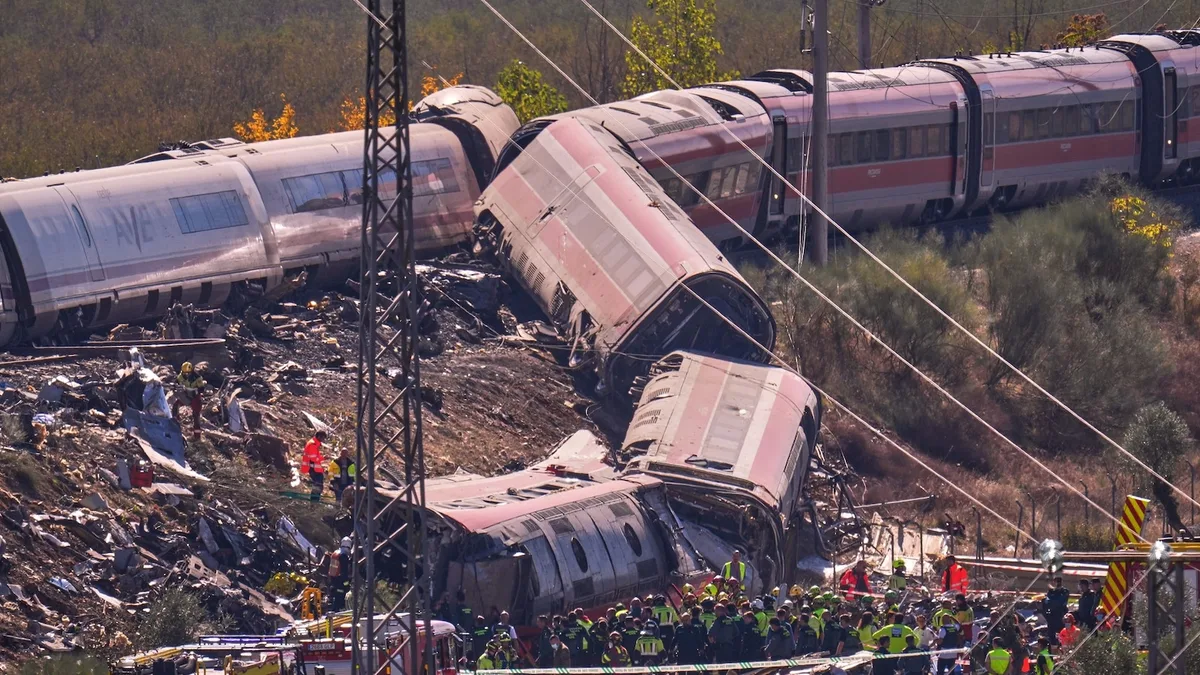
According to the information reported in the immediate aftermath, the collision occurred on 28 October 2026 near Urda, approximately 100 kilometres south of Madrid, involving high-speed passenger trains operated by Renfe and Iryo.
The accident caused numerous fatalities and injuries, prompting a major emergency response and raising serious concerns about the circumstances in which the trains were operating immediately before the collision.
The precise sequence of events, including the operation of signalling systems, communications between railway personnel and the functioning of the safety mechanisms, will be central to the investigation.
At this stage, it is essential to distinguish between established facts, preliminary information and hypotheses concerning the causes of the accident. A technical malfunction does not necessarily establish negligence, just as compliance with ordinary operating procedures does not automatically exclude responsibility.
Only a detailed examination of the available evidence can determine whether the accident resulted from human error, infrastructure deficiencies, operational failures, inadequate safety procedures or a combination of circumstances.
Foreign passengers and families affected by the accident
The presence of passengers from different countries gives the Urda accident a significant international dimension.
Foreign nationals travelling in Spain enjoy the same fundamental rights to safety, access to justice and effective judicial protection as Spanish passengers. Their nationality or place of residence does not prevent them from participating in judicial proceedings or pursuing legally available remedies.
For families living abroad, however, obtaining reliable information may prove particularly difficult. Relatives may need to communicate with Spanish hospitals, police authorities, forensic institutions, railway operators, consulates and judicial bodies.
In fatal cases, the identification of victims, the release and repatriation of remains, the delivery of official documentation and access to forensic findings may require coordination between several authorities.
Diplomatic and consular assistance can play an important role, but it does not replace independent legal representation where families wish to obtain access to the investigation or participate formally in judicial proceedings.
Foreign victims should not be placed in a position where geographical distance or language barriers prevent them from understanding how the accident occurred or from exercising their procedural rights.
The technical investigation: establishing the causes of the collision
A major railway accident in Spain normally gives rise to an independent technical safety investigation, separate from any criminal or civil proceedings.
The purpose of the technical investigation is to reconstruct the accident, identify its immediate and underlying causes and recommend measures to prevent similar incidents.
In Spain, railway accident investigations fall within the institutional framework established by Spanish railway safety legislation and Directive (EU) 2016/798 on railway safety, as amended and implemented.
The investigation should examine the condition of the railway infrastructure, the operation of signalling and train protection systems, the movement and speed of the trains, communications between drivers and traffic controllers, maintenance records and the applicable operating procedures.
Signalling, train protection and operational decisions
Particular attention must be paid to the systems intended to prevent collisions between trains.
Modern railway networks rely on several layers of protection, including signalling, traffic control, automatic train protection systems and operating protocols designed to prevent unsafe train movements.
Investigators must establish which systems were installed and operational on the relevant section of track, whether they functioned as intended and whether the circumstances of the collision exposed any technical or organisational shortcomings.
It will also be necessary to examine the decisions taken by railway personnel and traffic controllers, the information available to them at the relevant time and whether the applicable procedures were appropriate and correctly implemented.
The importance of preserving evidence
The technical investigation will depend heavily on the preservation and examination of evidence.
Train event recorders, signalling logs, radio communications, electronic records, maintenance documentation and operating instructions may be essential to reconstructing the sequence of events.
Independent experts may also be required to examine the interaction between the trains, the infrastructure and the safety systems.
For victims and their families, the preservation of this material is particularly important because the technical findings may later have consequences for criminal proceedings and civil liability claims.
The role of Renfe, Iryo and ADIF
The accident involves several entities with different responsibilities within the Spanish railway system.
Renfe is Spain’s state-owned railway operator, while Iryo is a private railway operator with Spanish and Italian corporate participation. Both operate passenger services within the Spanish railway network.
ADIF, the Spanish public railway infrastructure manager, has responsibilities relating to the infrastructure and the management of railway traffic within its sphere of competence.
The existence of several entities does not mean that all necessarily bear responsibility for the accident. Their respective obligations must be examined in light of the applicable legislation, operational arrangements and technical evidence.
The investigation must determine whether any relevant failure occurred in train operation, traffic management, infrastructure maintenance, signalling, safety supervision or the coordination between the entities involved.
It must also distinguish between an isolated operational error and a possible organisational or systemic failure.
That distinction is fundamental, particularly when assessing whether responsibility might extend beyond the individuals directly involved in the operation of the trains.
What the preliminary findings reveal about the safety system failure
Information released in the days following the accident has begun to clarify some of the circumstances preceding the collision.
According to reports published by RTVE and other Spanish media, the LZB automatic train protection system suffered a major failure at approximately 8:30 a.m., affecting a section of the Madrid–Seville high-speed railway.
The malfunction caused several trains to stop automatically. Railway traffic then had to be managed through alternative operating procedures involving the ADIF control centre and direct communications with train drivers.
Preliminary accounts indicate that the Renfe train was subsequently authorised to resume its journey, while the Iryo train remained stationary ahead of it.
The central question is why the Renfe train was allowed to continue towards a section of track still occupied by another train, and whether the applicable safety procedures were correctly followed.
According to information reported on 31 October, Spain’s Minister of Transport acknowledged that the procedures applied after the signalling failure were incorrect and that the collision could have been prevented. These statements are significant, but they do not replace the findings of the technical and judicial investigations. The evidence will need to establish the precise instructions issued, the information available to the control centre, the actions of the drivers and the reasons why the successive safety barriers failed to prevent the accident.
Could the accident give rise to criminal liability in Spain?
The possibility of criminal responsibility is one of the most important legal questions arising from the tragedy.
Under Spanish criminal law, serious negligent conduct causing death or injury may constitute an offence, particularly under Articles 142 and 152 of the Spanish Criminal Code (Código Penal).
However, criminal liability cannot be inferred solely from the seriousness of the accident or the existence of a technical or operational failure.
It must be established that an identifiable person breached a legally relevant duty of care, that the breach was sufficiently serious to constitute criminal negligence and that it was causally connected to the deaths or injuries.
Individual responsibility and organisational failures
The criminal investigation may examine the conduct of railway traffic controllers, operational supervisors, maintenance personnel and other individuals whose decisions or omissions may have contributed to the accident.
It may also need to determine whether the relevant decisions were made in accordance with established procedures, whether personnel received adequate training and whether the organisations concerned had implemented appropriate safety controls.
An important distinction must be drawn between an individual mistake and an organisational failure that made the accident possible.
For example, if an employee followed instructions that were themselves unsafe or inadequate, the investigation may need to examine the responsibilities of those who designed, approved or supervised the relevant procedures.
The identification of an operational error should therefore not necessarily mark the end of the investigation.
At the same time, the attribution of criminal liability to companies or public bodies is subject to specific limitations under Spanish law. Corporate criminal responsibility cannot simply be presumed from the conduct of employees, and the position of public entities requires particular consideration.
The rights of victims in criminal proceedings
Spanish criminal procedure allows victims and, in appropriate circumstances, relatives of deceased victims to participate actively in proceedings.
Depending on their legal standing, they may seek access to the case file, request investigative measures, submit expert evidence, challenge certain judicial decisions and pursue the civil liability arising from an alleged criminal offence.
For foreign families, this possibility is particularly relevant.
Participation in the judicial investigation can serve a purpose extending beyond compensation: obtaining an accurate account of the events, examining the evidence and ensuring that potential responsibilities are properly investigated.
The extent and timing of access to the investigation may nevertheless be affected by procedural restrictions, including any order imposing confidentiality during the investigative stage.
Independent technical investigations and judicial proceedings
The technical safety investigation and criminal proceedings pursue different objectives.
The technical investigation seeks to determine the causes of the accident and recommend improvements to railway safety. Its purpose is preventive rather than punitive.
The criminal investigation, by contrast, examines whether particular conduct may constitute a criminal offence and whether the legal requirements for individual responsibility are satisfied.
These investigations may consider overlapping evidence, but their conclusions are not interchangeable.
A technical finding identifying a safety failure does not automatically establish criminal negligence. Conversely, the absence of criminal liability does not necessarily mean that the railway system operated satisfactorily or that no civil liability exists.
For victims and families, understanding this distinction is essential when interpreting official reports and developments in the judicial proceedings.
The particular challenges facing foreign victims
Foreign passengers and their relatives may encounter practical difficulties in obtaining information and exercising their rights.
Spanish judicial proceedings are generally conducted in Spanish. Official documentation, expert reports, witness statements and procedural decisions may therefore require translation and legal explanation.
Families residing abroad may also need assistance obtaining death certificates, forensic documentation, medical records and evidence relevant to the circumstances of the accident.
Where criminal proceedings are opened, foreign victims may be represented by Spanish legal professionals, subject to the applicable procedural requirements.
Their participation may be coordinated with lawyers in their country of residence, particularly where the accident has consequences involving foreign employment, insurance, inheritance or family law.
Consular assistance and independent legal representation perform different functions and may complement one another.
Civil liability and compensation: a separate but related question
Although establishing the causes of the accident and determining responsibility should remain the immediate priorities, the tragedy also raises questions concerning the legal remedies available to victims.
Regulation (EU) 2021/782 on rail passengers’ rights and obligations, together with the CIV Uniform Rules and applicable Spanish legislation, establishes a framework governing railway carrier liability for passenger deaths and injuries.
Victims may also have rights under Spain’s compulsory passenger accident insurance system, independently of the final determination of civil liability.
Compensation may encompass physical injuries, psychological consequences, financial losses and, in fatal cases, the harm suffered by qualifying relatives.
For foreign victims, the assessment may need to take account of medical treatment received abroad, loss of earnings in their country of residence and the circumstances of dependent family members.
These matters should be addressed without losing sight of the broader purpose of the investigation: determining what happened and whether the tragedy could have been prevented.
Frequently asked questions
Can foreign victims participate in the Spanish criminal investigation?
Yes, provided they meet the applicable procedural requirements. Foreign nationality does not, in itself, prevent victims or qualifying relatives from participating in Spanish criminal proceedings through appropriate legal representation.
Who investigates a serious railway accident in Spain?
A serious railway accident may be investigated by the competent independent railway safety investigation body and, separately, by the judicial authorities. The Guardia Civil may also carry out investigative activities under judicial direction.
Does a railway signalling failure automatically establish criminal liability?
No. Criminal responsibility requires proof of the elements of a specific offence, including a legally relevant breach of the duty of care and the necessary causal connection with the resulting harm.
Can families request additional investigative measures?
Where they have the appropriate procedural standing, victims and qualifying relatives may request investigative measures and submit relevant evidence, subject to judicial assessment and procedural rules.
Can foreign relatives follow proceedings without residing in Spain?
Generally, yes. Spanish legal representatives can undertake many procedural steps on their behalf, although particular proceedings may require personal participation or additional formalities.
Must the criminal investigation be completed before compensation can be considered?
Not necessarily. Certain insurance benefits, advance payments and preliminary claims may be pursued while investigations continue. The relationship between criminal and civil proceedings must nevertheless be assessed carefully.
International legal assistance for victims and families
The Urda railway accident illustrates the importance of independent technical investigations, transparent judicial proceedings and effective access to justice for victims of major transport disasters.
For foreign passengers and their families, understanding the investigation, obtaining reliable information and exercising procedural rights in Spain may require specialist legal assistance.
BCVLEX has experience in international personal injury litigation, transport accidents and cross-border liability disputes, including cases involving complex technical evidence and proceedings in several jurisdictions.
The firm can assist foreign victims and families in understanding the Spanish judicial process, following the investigation, assessing possible criminal and civil responsibilities and protecting their interests throughout the proceedings.
For further information, visit BCVLEX.